


Downtown Medford property owners are approaching the final step in establishing an Economic Improvement District (EID), with the Medford City Council scheduled to consider the plan on March 18. The district would provide coordinated services focused on economic development, beautification, activation, and advocacy for downtown properties, administered by the Downtown Medford Association (DMA).
The proposed district is the result of more than two years of outreach and collaboration. It allows property owners to work together to strengthen the appearance, function, and future of downtown.
If approved, the EID would fund services that directly improve Downtown Medford. These include facade and streetscape improvements, business support, maintenance coordination, beautification, and efforts to attract new businesses and investment.
The potential establishment of an EID follows three required steps under state and city codes:
The first step, approved by City Council in October 2025, included a Preliminary Economic Improvement Plan and authorized city staff to begin the formation process.
The second step, unanimously approved by City Council in January, was an ordinance establishing the EID, and included mailing notices to property owners within the proposed boundaries.
The third and final step will be the public hearing on March 18, during which property owners will have a last opportunity to provide input before the Council makes its final decision. In addition to public comments, owners of properties to be assessed have an opportunity to object in writing. If owners of properties representing more than 33% of total amount of assessment object, the EID shall not be established. If not, the Council has discretion to establish or not establish the EID based upon testimony at the public hearing. Any written objection must be received no later than 5:00pm on Wednesday, March 18, 2026, and must be delivered to the City Manager’s Office at 411 West 8th Street, Room 310, Medford OR 97501.
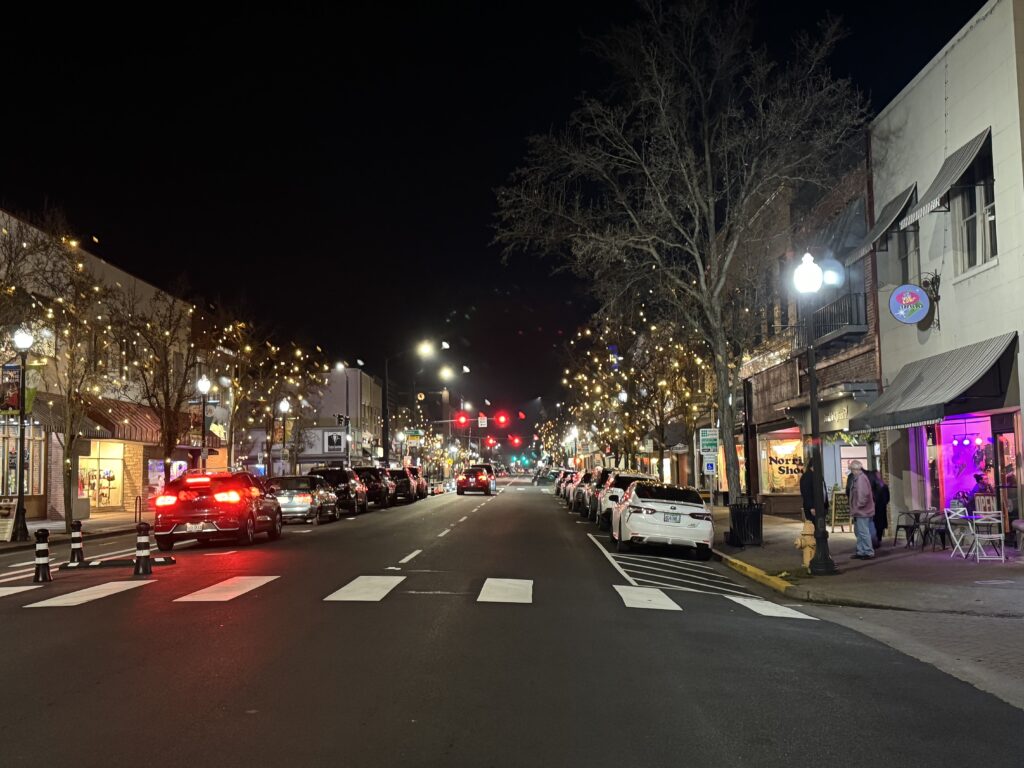
DMA Executive Director Annie Jenkins said the effort reflects steady engagement from the people most connected to downtown. “Property owners have been actively involved in shaping this plan from the beginning,” Jenkins said. “This gives them a way to prioritize improvements that support their buildings, their tenants, and the overall experience of downtown.”
Downtown improvements often extend beyond business activity. As districts become more active and attractive, they also support housing demand. People are more likely to live in areas that offer walkable access to restaurants, services, and community activity. This strengthens downtown as both a business center and a neighborhood.
Andy Owen, a downtown property owner and principal architect at ORW Architecture, said the proposed district reflects a shared interest in strengthening the community.
“When we improve our individual properties, we improve downtown as a whole,” Owen said. “That creates momentum. Businesses benefit. Residents benefit. The community benefits.”
Economic Improvement Districts are used in cities across Oregon, including McMinnville and Bend. The proposed Medford EID would be funded through an annual assessment based on parcel size. Most properties would be assessed at $0.10 per square foot, with a reduced rate of $0.075 per square foot available to qualifying government and nonprofit properties.
Based on district parcel data, the median annual assessment is approximately $526 per property. The district would have an initial three-year term, after which property owners would have the opportunity to vote on renewing it. The district would operate with defined oversight and regular review to ensure it continues to provide value.
A map of the proposed district is linked below. Property owners and community members can learn more about the district, services, and assessment structure at:
More about EID and FAQ